920 Woodstock Rd, Roswell, GA 30075
WOMEN'S HEALTH & WELLNESS

Est. Reading Time: 4 Mins
When it comes to hormones, it’s a common misconception that women only need estrogen and men only need testosterone. In reality, testosterone plays a variety of key roles in women’s physical and mental health.
As a matter of fact, women actually produce more testosterone than they do estrogen.
Throughout this article, we’ll cover the impacts testosterone makes, explore common symptoms and causes of imbalance, and offer a few suggestions in case you’re experiencing signs of hormone imbalance.
You might’ve been surprised to learn that women actually produce more testosterone than they do estrogen. This can sound counterintuitive given the hormone’s association with male characteristics, but the ovaries do indeed produce more testosterone than estrogen.
This is easy to miss on a lab report, because the two are measured in different units. Estradiol is reported in picograms per milliliter (pg/mL), while testosterone is reported in nanograms per deciliter (ng/dL), so the numbers on the page aren’t directly comparable.
Consider a woman in her 20s. Normal testosterone runs roughly 15-70 ng/dL. Across most of her cycle, estradiol sits around 30-100 pg/mL, which converts to about 3-10 ng/dL. Testosterone is the larger quantity by a wide margin for most of the month.
That gap is also a reminder of how potent estrogen is. It does an enormous amount of work at a fraction of the concentration.If you measure estrogen in the same unit as testosterone, it’d be 0.13-0.37 ng/dL. This highlights how potent estrogen can be – even in small amounts.
Enough math for now. Let’s review the roles testosterone plays in women’s health.
In women, testosterone receptors can be found in cells throughout the body. This includes muscle, bone, skin, and especially the brain. When the ovaries produce testosterone, it then flows through the bloodstream and binds to these cell receptors to exert its effects.
If you’re new to terminology about the endocrine system, you might find it helpful to read “What is the Endocrine System (And Why Care)?”
Cells in both muscles and bones are equipped with receptors specifically for testosterone, known as androgen receptors. When testosterone binds to an androgen receptors in muscle cells, it then stimulates the growth of muscle fibers and promotes protein synthesis. This is important for maintaining lean muscle and repairing the muscles after a workout or injury.
Similarly, testosterone plays a vital role in bone repair – especially after resistance training. In the same way that weight training causes small tears in muscle tissue, it also creates tiny microscopic fissures in the bones.
During post-workout recovery, the body releases on cells called osteoblasts to repair the ‘microcracks’ in the bones. These cells lay down new minerals to remodel and strengthen the bone. Testosterone is responsible for enhancing the activity of these osteoblasts – making the hormone essential for maintaining bone density
Testosterone influences the metabolism in a number of ways. First, it helps to maintain muscle mass. The more lean muscle your body has, the higher your resting metabolic rate (RMR) will be.
While testosterone helps reduce the accumulation of fat, it also affects where fat is stored. The hormone reduces the buildup of visceral fat, which refers to fat stored around internal organs (which is also associated with a variety of health risks).
Testosterone also impacts insulin sensitivity, which refers to your body’s ability to use glucose for energy. Individuals who are more insulin sensitive also minimize the conversion of unused glucose into fat storage. When the cells are insulin resistant – individuals will are more likely to accumulate extra fat and will be prone to Type 2 diabetes
Androgen receptors are found throughout various regions of the brain. One notable example is the hippocampus, which is responsible for memory and learning. Testosterone helps support the formation of new neural pathways – which then supports the ability to process, store, and recall information.
Testosterone also plays a role in regulating well-known neurotransmitters like dopamine and serotonin. These are both vital for maintaining focus, managing stress, and regulating mood.
Testosterone influences another region of the brain known as the hypothalamus, which is important for the psychological factors in maintaining sexual desire (ie libido).
It also affects the physiological aspects of sexual arousal. Without ample testosterone levels, women often report vaginal dryness and pain during sex.
Testosterone’s influence even extends to fertility. It supports ovarian function and plays a role in the maturation of follicles and the release of eggs – which is crucial for maintaining a healthy menstrual cycle.
Now that we’ve reviewed a few of testosterone’s roles in women’s health, it’s easier to see why low testosterone can be detrimental. We examine the various symptoms in further depth in the article, “Women’s Wellness Alert: 13 Tell-Tale Signs of Hormone Imbalance.”
For women navigating perimenopause or menopause, here’s a quick look at the most common signs of low testosterone:
Several factors can contribute to testosterone imbalance in women. To a large degree, it’s ‘natural’ for women navigating perimenopause or menopause to present symptoms of low testosterone since the ovaries produce lower levels. Just
There’s also quite a few unnatural causes of low testosterone, which are discussed in articles like, “Endocrine Disrupting Chemicals: 5 Things You Need to Know” along with “Did ‘The Pill’ Cause a Hormone Imbalance Crisis in the US?“
Lifestyle factors also play a huge part in overall hormone balance. Chronic stress, poor eating habits, irregular sleep, and a sedentary lifestyle can easily derail your body’s ability to regulate hormone levels.
At Elite Health HRT, it’s no secret that we’re advocates of hormone replacement therapy as a treatment for hormone imbalance. If you’re experiencing any symptoms, we encourage you to seek medical advice and welcome you to book a free consult at our clinic.
Still, we view HRT as a single part of a more comprehensive approach to treating symptoms and achieving overall wellness. Here’s a few other recommendations for managing symptoms:
We understand that these recommendations might seem quite obvious, and it can sometimes feel like following them is an uphill battle. If you’re feeling overwhelmed by symptoms, it’s worth getting your hormone levels tested.
At Elite Health HRT, we make it easy for women to understand their hormone levels by offering a comprehensive lab panel for a flat $150. During your first visit to our clinic, you can discuss symptoms with our nurse practitioner – and we’ll also draw blood samples for lab analysis.
After lab results come in, our nurse practitioner will review your levels and share recommendations for potential treatment plans in your follow-up consult.
You can click the link below to book your first appointment. Also feel free to reach out to our staff if you have any questions beforehand!
If you’re wondering whether low testosterone could be affecting you, you probably have a few questions. Let’s talk through the common FAQs.
Q1. Do women need testosterone?
Yes. Testosterone receptors sit throughout the female body – muscle, bone, skin, and especially the brain. Women’s ovaries produce it, and it drives lean muscle, bone density, metabolic rate, mood, cognition, and libido. The idea that it’s a male hormone is a marketing convention rather than physiology.
Q2. What are the symptoms of low testosterone in women?
Brain fog and memory lapses, weight gain concentrated around the abdomen, difficulty building or holding muscle alongside persistent fatigue, mood changes and trouble managing stress, declining bone density, and low libido. These overlap heavily with perimenopause symptoms, which is part of why low testosterone gets missed in women.
Q3. What does testosterone do for women’s health?
Four main jobs. It binds androgen receptors in muscle to drive protein synthesis and repair. It supports the osteoblast activity that rebuilds bone after loading. It influences insulin sensitivity and where fat gets stored. And in the brain, it affects dopamine and serotonin signaling, which shapes mood, focus, and drive.
Q4. Can low testosterone cause weight gain in women?
In effect, yes. Testosterone maintains lean muscle, and muscle sets your resting metabolic rate, so losing it lowers what you burn doing nothing. It also influences insulin sensitivity and appears to limit visceral fat accumulation specifically – the fat stored around organs rather than under the skin.
Q5. What causes low testosterone in women?
Perimenopause and menopause account for much of it, since ovarian production declines. Beyond that: chronic stress, poor sleep, a sedentary pattern, restrictive eating, hormonal contraceptives, and cumulative exposure to endocrine-disrupting chemicals. Being under 40 doesn’t rule it out, which is where it most often gets overlooked.
Q6. Can testosterone help with low libido in women?
It’s one of the better-supported uses. Testosterone acts on the hypothalamus, which governs the psychological side of desire, and it also affects the physical side – low levels commonly show up as dryness and discomfort during sex. Libido has many inputs, so labs are worth checking rather than assuming.
Q7. Do women produce more testosterone than estrogen?
By weight, generally yes, though the comparison is easy to misread. The two are reported in different units on a lab panel, estradiol in pg/mL and testosterone in ng/dL, so the numbers aren’t directly comparable as printed. Estradiol is far more potent per unit, which is why smaller amounts do more.
Q8. How can women naturally support healthy testosterone levels?
Resistance training is the most direct lever, since it both stimulates production and builds the muscle testosterone maintains. Then adequate protein, seven to nine hours of sleep, and managing chronic stress, since sustained cortisol suppresses production. Cutting ultra-processed food reduces both seed oil intake and EDC exposure.
Q9. How is low testosterone treated in women?
Treatment starts with confirming it on bloodwork alongside estradiol, progesterone, and thyroid, since symptoms overlap. If testosterone is genuinely low and symptoms warrant it, low-dose therapy can be part of a plan. Worth knowing there’s no FDA-approved testosterone product specifically for women, so it’s prescribed off-label at doses far below male protocols.
Q10. Does testosterone affect bone density in women?
Yes, and it’s underappreciated. Resistance training creates microscopic fissures in bone, and osteoblasts rebuild them stronger. Testosterone enhances that osteoblast activity. Since bone loss accelerates sharply after menopause, the hormone doing the rebuilding declining at the same moment is a meaningful part of the osteoporosis picture.
In-person consult with our lead nurse practitioner (15 mins)
Did you find this article helpful? Consider spreading the word!

What could pesticides, cosmetics, non-stick pans, and paper receipts possibly all have in common?

Completely avoiding contact with EDC's is difficult. Still, small changes can still boost overall health
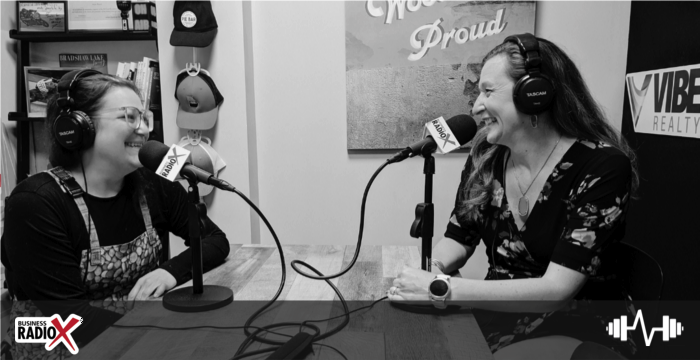
Check out this podcast recap to hear Elite Health HRT's NP, Kitty Houston for a discussion on hormone therapy
Subscribe now to keep reading and get access to the full archive.