920 Woodstock Rd, Roswell, GA 30075
MEN'S HEALTH & WELLNESS

Est. Reading Time: 4 Mins
Testosterone Replacement Therapy (TRT) was first used to clinically treat hypogonadism in the 1940s. Towards the turn of the century, the treatment saw a considerable rise in popularity and has since worked its way into the spotlight of mainstream medicine.
As popularity increases, so does scrutiny. Hundreds of millions of dollars have been poured into research to answer the questions, “Is testosterone replacement therapy safe? What’s the risk profile for various age groups? When can it be most effective? What can patients do to maximize potential benefit and minimize potential risk? Who should use it – and who shouldn’t?”
In an effort to cut through the endless noise surrounding TRT, we’ve put together a short article to provide nuanced, yet concise, answers to these questions.
Let's Start with the Basics.
As a quick recap, Testosterone Replacement Therapy is a medically supervised treatment designed to help men with low testosterone restore their levels to an optimal therapeutic range. By introducing bioidentical testosterone into the body, providers can help men combat a variety of symptoms, which include reduced muscle mass, difficulty losing weight, low libido, and brain fog.
There are various means of administering testosterone, such as gels, patches, injections, and pellets. Each method has the same end goal of restoring levels but naturally differs in administration. We explore the differences in detail in the article, “Patches, Gels, Injections, Pellets: Which Form of TRT is Best?”
For this discussion, we’ll focus on intramuscular injections (IM). At Elite Health HRT, IM injections are used to deliver testosterone directly into the muscle, which then ensures a steady and consistent release of the hormone into the bloodstream. This approach also allows for precise dosage control and has been shown to produce optimal therapeutic outcomes for our patients.
It's a Two-Way Street Between Patients & Providers.
The safety of TRT cannot be painted with a broad brush. Instead, this discussion requires a nuanced review of medical, physiological, and personal factors. Still, TRT is widely accepted as safe when it’s prescribed and monitored by healthcare professionals adept in hormonal therapies.
As of 2024, there are a multitude of doctors and clinical settings where patients can receive HRT/TRT treatments. However, treatments are often facilitated by medical professionals with little expertise in the area.
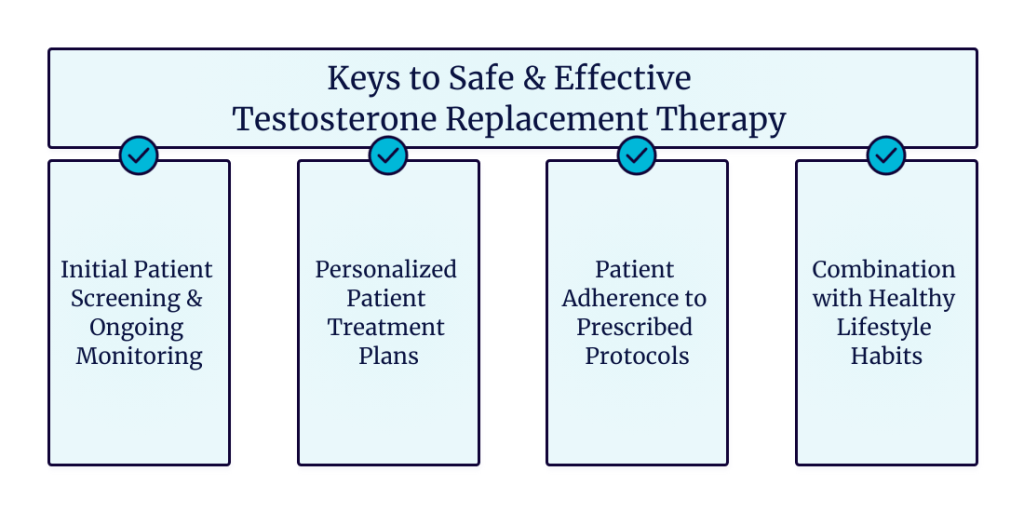
In our practice, the cornerstone of TRT safety rests on four main pillars:
The question, “Is testosterone replacement therapy safe?” cannot be answered broadly. Instead, it requires consideration of each patient’s unique circumstances (medical history, lifestyle factors, etc.).
Here's a quick look at a few of the many potential benefits of TRT for men.
Is testosterone replacement therapy safe? Under the right conditions, yes.
While TRT offers significant benefits for men with low testosterone, it’s crucial to approach it with care and common sense. Some of these probably go without saying, but here’s 7 crucial recommendations to consider for men considering TRT, or for those already on TRT:
Here's 10 things to consider when first talking to your provider about TRT.
Cardiovascular Issues: Testosterone increases the production of red blood cells, which causes the blood to thicken and can increase the risk of cardiovascular events. Men with a history of cardiovascular issues should discuss these risks with their provider.
Accelerated Prostate Enlargement: There are valid concerns that TRT accelerates the growth of an already enlarged prostate. However, research suggests that TRT can be prostate-protective when it’s at a normal size. Regardless, it’s not advised for men with an enlarged prostate to start TRT. We cover this more in our article, “Debunked: Top 6 Myths About Hormone Replacement Therapy“.
Sleep Apnea: TRT can worsen sleep apnea in some patients. If you have or suspect you have sleep apnea, it is crucial to monitor your condition closely while on TRT. Sometimes, a simple nasal strip is all that’s needed to open up the airways and reduce snoring. For others, a CPAP machine is required to ensure the body takes appropriate amounts of oxygen during sleep.
Injection Site Reactions: Some patients experience skin reactions at the injection site, such as redness, swelling, or irritation. These are typically mild and dissipate after a few minutes but can be bothersome for some individuals.
Acne & Oily Skin: TRT can increase oil production in the skin, leading to acne and an oily complexion. This is usually manageable with proper skincare but can be a persistent issue for some men.
Male Pattern Baldness: This is not caused by testosterone directly, but can be attributed to dihydrotestosterone (DHT). Our bodies naturally convert some testosterone into the more potent DHT through a process called ‘5-alpha reductase’. For men who are genetically predisposed to male-pattern baldness, the increase in testosterone and DHT may accelerate hair loss.
Mood Swings: When testosterone is in an optimal range, it helps men regulate mood and manage stress. However, some men who are on self-administered TRT protocols fail to moderate their estrogen levels. Since some testosterone converts to estrogen through a process called ‘aromatase’, their estrogen levels rise and cause mood swings and other unwanted symptoms. This is why TRT requires blood monitoring and the potential use of ‘aromatase inhibitors’ (AI) that can block excess estrogen production
Fluid Retention: Some men may experience fluid retention as the body retains more sodium, which can lead to swelling in the extremities and weight gain. This is often moderated by monitoring sodium intake and staying hydrated.
Testicular Atrophy: Exogenous testosterone can suppress natural testosterone production, leading to shrinkage of the testicles over time. This is why it’s important to combine exogenous testosterone with medications like gonadorelin, which preserves the body’s baseline production of testosterone.
Reduced Fertility: TRT can decrease sperm production, potentially impacting fertility. Men who are planning to have children should discuss this risk with their TRT provider and explore potential options to preserve fertility.
Now that we’ve covered the basics, let’s now examine the most important factors of a safe, effective TRT protocol.
Generally speaking, side effects of TRT in men typically arise when they’re taking excessive doses and/or fail to monitor labs and make adjustments with a licensed provider. These side effects can be especially prevalent when men engage in using synthetic anabolic steroids – which is often conflated with TRT with bioidentical hormones. This is a big reason why there tends to be so much confusion around the question of, “Is testosterone replacement therapy safe?”
TRT has not been shown to cause prostate cancer or enlargement when the prostate is already in a healthy state. However, TRT is not advisable for men who already have prostate cancer, as there are valid concerns that it could accelerate its advancement.
For men over 35, it’s mandatory at our practice at Elite Health HRT to measure PSA (prostate-specific antigen) levels in the blood prior to starting TRT. If they’re already elevated, this can be a warning sign of either an enlarged prostate – or potentially prostate cancer. Either way, it would be worth hitting pause on considering TRT and first consulting a urologist for further examination.
It’s also worth noting this topic is still undergoing active research. As of now, studies have not found a clear correlation between TRT and increased risk of an enlarged prostate or prostate cancer. While men with prostate cancer are not generally considered as candidates for TRT, the treatment is still considered safe for men with healthy prostates.
If you’re not familiar with the term, this is colloquially referred to as ‘man-boobs’. Generally, the buildup of fatty tissue in the chest is due to a massive spike in estradiol, a form of estrogen. The real question is, why does TRT lead to increased estrogen levels?
Men convert some testosterone into two other hormones. One is DHT (dihydrotestosterone) – which we’ll explore next. The second is estradiol.
In the same way women still need testosterone, men still need small amounts of estrogen for a variety of functions. To produce it, an enzyme in the fat cells facilitates a process called ‘aromatization’, thus converting testosterone into estrogen.
This is another reason why ongoing blood monitoring is so important during TRT. A class of medications called ‘aromatase inhibitors‘ (AI’s) like anastrozole are available to inhibit excess conversion, which keeps estradiol in an ideal range. Ultimately, this helps mitigate the risk of unwanted tissue in the chest.
It’s worth noting that while high estradiol leads to unpleasant side effects, so does having a complete lack of estradiol. Men still need to maintain an optimal balance in order to regulate mood and even sexual function.
As mentioned above, men convert some testosterone into a more potent form of the hormone called DHT. While this is an especially important hormone for developing male characteristics, excessive DHT levels are what’s responsible for symptoms like alopecia (the clinical term for male-pattern baldness).
In our practice at Elite Health HRT, the vast majority of men do not observe any notable loss in hair follicles when starting TRT. However, some men can be more ‘androgen-sensitive’ to exogenous testosterone and may start noticing a gradual loss of hair.

When exogenous testosterone is introduced into the male body, the brain essentially thinks, “I don’t need to create testosterone anymore.”
Specifically, the pituitary gland stops sending as much LH (Luteinizing Hormone) and FSH (Follicle Stimulating Hormone) to the testes. A group of cells in the testes, referred to as the ‘Leydig Cells’, receive LH as a signal and produce testosterone. Another group of cells called the ‘Sertoli Cells’ receive FSH as a signal and produce sperm.
When men start TRT, the body begins to produce less LH and FSH, which reduces the amount of testosterone and sperm the body produces on its own. This is precisely why it’s so important to combine TRT with medications like gonadorelin, which is shown to maintain existing LH and FSH levels.
For men in their reproductive years, this can be a bit tricky to navigate. If you’re trying to start a family, we advise our patients to wean off TRT over a 90-day period. Within a few short months, fertility levels will gradually return to baseline.
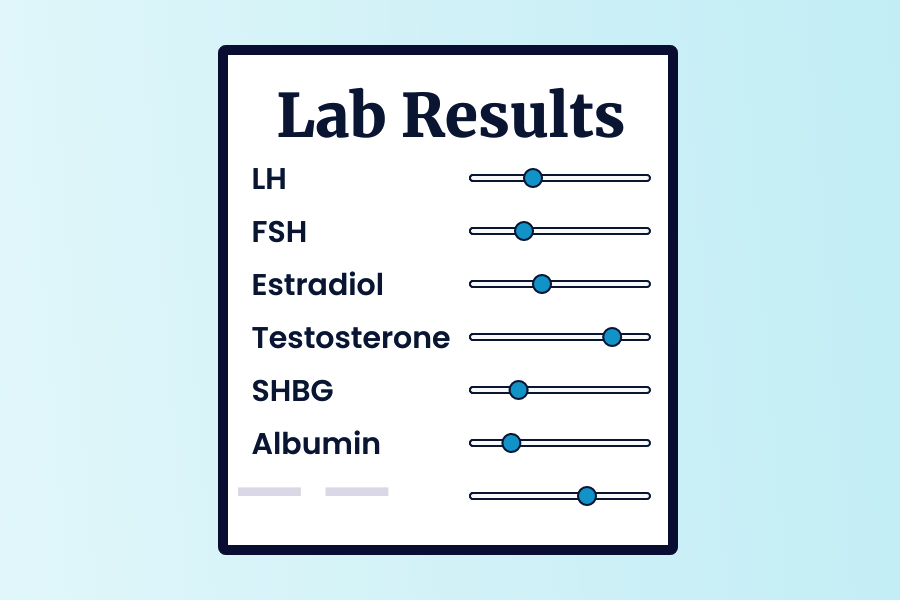
This underscores the importance of running baseline tests before starting TRT.
If a provider answers yes to the question of, “Is testosterone replacement therapy safe,” but doesn’t pay any intention to your blood pressure – you should find a new clinician.
When the amount of testosterone in your body increases, so does your red blood cell count. This thickens the blood, which can then increase blood pressure & risk of cardiovascular events. The medical term for this condition is erythrocytosis – and specifically refers to the increase in the levels of hematocrit and hemoglobin in the blood.
Because of the expected thickening of the blood, the following protocols are important to follow while on TRT:
Acne is a common side effect some individuals may experience during Testosterone Replacement Therapy (TRT), particularly due to increased oil production in the skin. To manage acne, it’s important to adopt a regular skincare routine that includes gentle cleansing twice daily to remove excess oil and dead skin cells.
There’s no need to go overboard with a 15-step skincare routine. Simple skincare products and water-based moisturizers often do the trick. Over-the-counter topical treatments containing benzoyl peroxide or salicylic acid can also be effective in treating any acne. For more persistent cases, a dermatologist may prescribe stronger topical retinoids or antibiotics.
Additionally, maintaining a balanced diet low in refined sugars and dairy products can also help reduce acne severity.
If acne becomes a significant concern, discussing it with your healthcare provider is crucial as they may adjust your TRT dosage or recommend alternative management strategies to alleviate this side effect.
Adopting healthy lifestyle habits is crucial for maintaining optimal blood pressure and supporting overall cardiovascular health, especially for TRT patients managing erythrocytosis. This includes a balanced diet rich in fruits, vegetables, lean proteins, and whole grains while limiting salt, processed foods, and saturated fats.
Regular physical activity, such as brisk walking, cycling, or swimming, can also help lower blood pressure by improving heart health and increasing blood flow. Additionally, managing stress through relaxation techniques like meditation, yoga, or deep-breathing exercises can contribute to healthier blood pressure levels.
Eliminating (or at least minimizing) alcohol consumption and avoiding smoking are other important factors that can positively impact blood pressure and overall well-being. Together, these healthy lifestyle habits can help mitigate the risk of high blood pressure and enhance the effectiveness of other erythrocytosis management strategies.
In answer to the main question, “Is testosterone replacement therapy safe for men,” let’s recap. The short answer is yes, assuming the following conditions are met:
The journey of managing testosterone levels is highly individualized. This is exactly why the Elite Health HRT team guides every patient through a targeted, evidence-based treatment plan to help them optimize their hormone levels so they can truly feel their best.
If you’re experiencing symptoms that might indicate low testosterone, or if you’re simply proactive about maintaining optimal hormonal balance, we encourage you to book a free initial consultation at our clinic. You can also learn more about our Testosterone Replacement Therapy treatments here.
In-person consult with nurse practitioner (15 mins)
New to peptide therapy? Download our free guide to learn about the science behind it

Newsflash: Age isn't the only reason men are experiencing hormone imbalance in 2024

If any of these sound familiar, consider it a sign to get your hormone levels checked
Subscribe now to keep reading and get access to the full archive.